
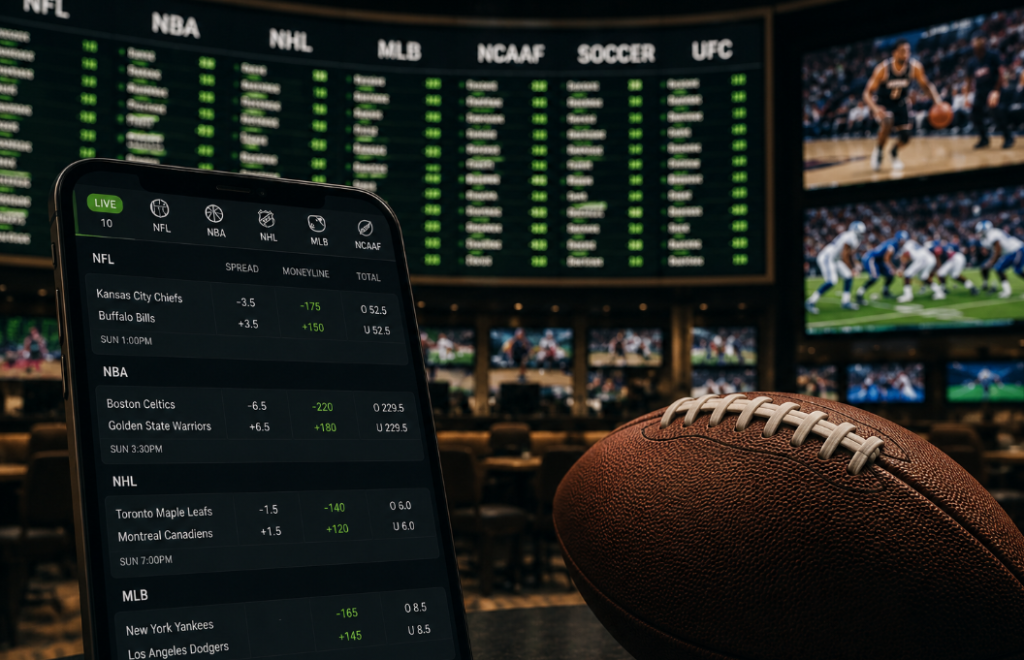
A sportsbook is a betting platform where Canadians can wager on sports such as NHL hockey, basketball, football, and tennis by selecting an outcome and accepting the odds offered for that bet. In practical terms, what a sportsbook is can be understood as a service that creates betting markets, assigns prices, accepts stakes, and settles a bet after the result is known. For example, a Canadian user may choose the Toronto Maple Leafs at decimal odds of 1.80 and stake C$20. If that hypothetical bet wins, the total return is C$36, including the original stake.
👌 How Does a Sportsbook Work?
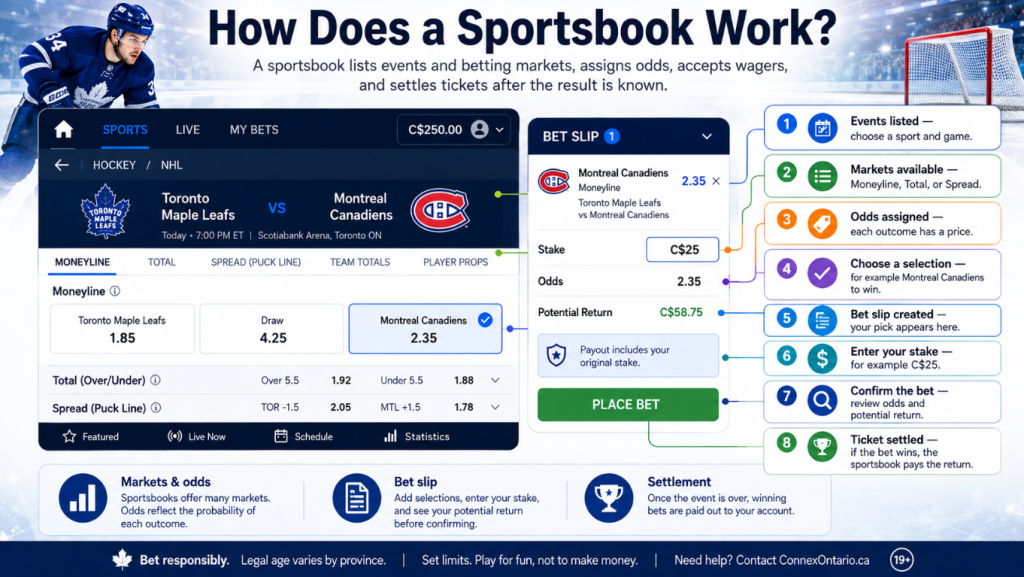
A sportsbook works by offering betting markets and odds on events, accepting wagers, and settling tickets. Available events, markets, and rules can differ by operator and location.
The sportsbook lists a sporting event, such as an NHL game.
It creates betting markets for that event.
It assigns odds to each available outcome.
The bettor chooses a selection and enters a stake.
The selection appears in the bet slip.
The bettor reviews and confirms the wager.
The sportsbook settles the bet when the outcome is known.
A winning ticket receives the applicable return under the market rules.
At 1.80, a C$25 NHL moneyline has a potential C$45 return if it wins. The C$20 profit excludes the original C$25 stake.
🏀 What Can You Bet on at a Sportsbook?
A sportsbook offers more than a single “who wins?” option. It can provide markets for the winner, point or goal handicap, combined score, player statistics, future championships, and in-play events.
Canadian sportsbooks may offer markets for NHL hockey, NBA basketball, NFL and CFL football, MLB baseball, soccer, tennis, golf, and UFC or MMA. The sports, leagues, and market types on a particular sports betting site depend on the operator, the event, and the rules applicable in the user’s province or territory.
✍ What Is a Sportsbook Betting Market?
A betting market is the specific outcome category offered for an event. Event, market, and selection are distinct parts of a bet.
An event is the sporting fixture available for betting. For example, Toronto Maple Leafs vs. Montreal Canadiens is the event.
A betting market is the type of wager offered on an event. In this example, the market is the Moneyline.
A selection is the specific outcome chosen by the bettor. For example, Toronto Maple Leafs to win is the selected outcome.
Odds are the price attached to a selection and are used to calculate the potential return. In this example, the decimal odds are 1.80.
A stake is the amount of money wagered on the chosen selection. In this example, the stake is C$25.
This distinction matters when using a sportsbook. A bet is placed on a particular selection within a defined market.
💯 What Are Sportsbook Odds?
Sportsbook odds are the price assigned to an available outcome and are used to calculate a potential return. They reflect the price offered by the sportsbook at the time the bet is accepted; they are not a guarantee that the selection will win.
Decimal odds are commonly displayed to Canadian users. With a C$50 stake at odds of 2.00, the calculation is C$50 × 2.00 = C$100 total return. The potential profit is C$50 because the C$100 return includes the original C$50 stake.
Some sportsbook betting screens also use American odds with plus or minus signs. Always check which odds format is displayed in the bet slip before confirming a wager.
⚽ What Is a Sportsbook Bet Slip?
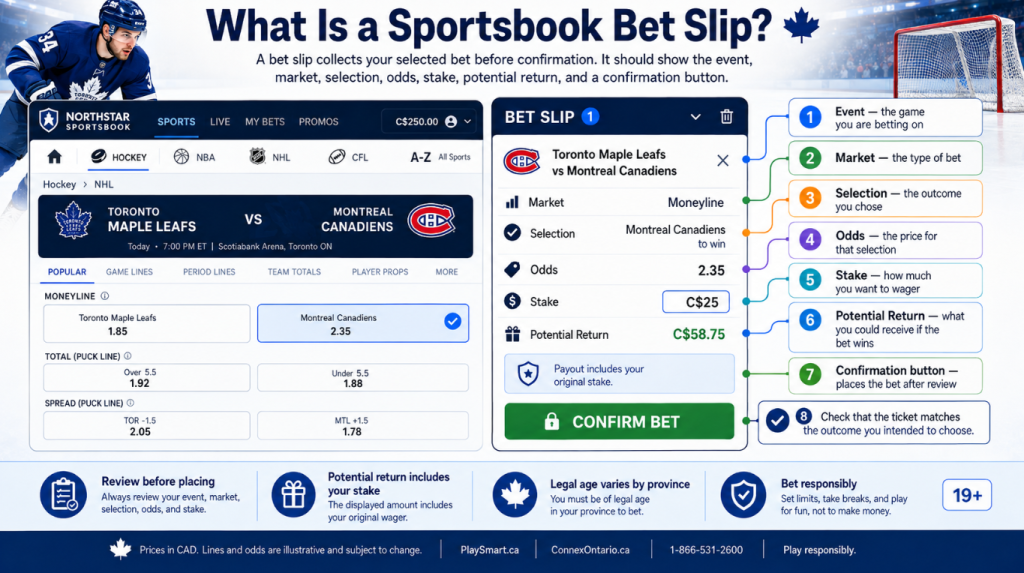
A bet slip collects a selected bet before confirmation. It should show the event, market, selection, odds, stake, potential return, and a confirmation button. Check that the ticket matches the outcome you intended to choose.
| Bet slip field | Example on a hypothetical NHL ticket |
|---|---|
| Event | Toronto Maple Leafs vs. Montreal Canadiens |
| Market | Moneyline |
| Selection | Toronto Maple Leafs to win |
| Odds | 1.80 |
| Stake | C$25 |
| Potential return | C$45 |
📚 Common Types of Bets Available at Sportsbooks
→ Moneyline
A moneyline is a bet on which side wins the event under the market rules. For example, a Toronto Maple Leafs moneyline selection wins if Toronto is the winning side as defined on that ticket.
→ Spread / Puck Line
A spread applies a points handicap before settlement. In hockey, a similar concept is often called a puck line; a team at −1.5 must win by at least two goals for that selection to win.
→ Totals (Over/Under)
A total is a bet on whether a statistic finishes above or below the sportsbook’s line. Over 5.5 total goals in an NHL game requires six or more combined goals, regardless of which team wins.
→ Parlays
A parlay combines several selections into one bet. It may show a higher potential return because all included selections typically need to win, subject to the sportsbook’s rules for a push or void.
→ Prop Bets
A prop bet is based on a specific player, team, or game event rather than only the final winner. Examples include a player to score, a player’s points, or the number of goals in a period.
→ Futures
A futures market settles later, often at the end of a season or tournament. A bet on the Stanley Cup winner or league MVP is a futures bet because the final outcome is decided in the future.
→ Live Betting
Live betting, also called in-play betting, takes place after an event has started. The score, time remaining, and current game state can affect available markets and odds while the game continues.
💲 How Do Sportsbooks Make Money?
Sportsbooks generally build a margin into their odds. Called the vig, vigorish, or juice, it can make a market’s implied probabilities add to more than 100%.
The margin helps price markets and manage risk. For beginners, odds are an operator-set price, not a neutral prediction or a promise of a return.
🆚 Sportsbook vs. Bookmaker: What Is the Difference?
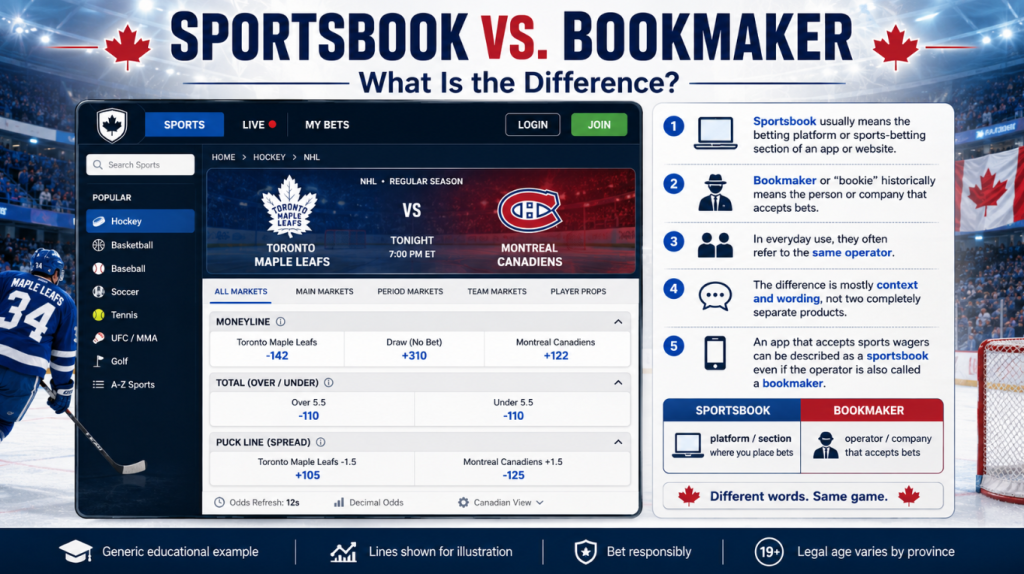
In everyday sports betting language, sportsbook and bookmaker often describe the same type of betting operator. A bookmaker or “bookie” historically refers to a person or company that takes bets, while sportsbook is now frequently used for the platform or section of a service dedicated to sports betting.
The difference is mostly about usage and context, not two completely separate products. An app that accepts wagers on sports can be described as a sportsbook even if its operator is also called a bookmaker.
🆚 Sportsbook vs. Sports Betting: What Is the Difference?
Sports betting is the activity of wagering on a sporting outcome; a sportsbook is the platform or operator through which the bet is placed. For example, placing C$20 on an NHL game is sports betting, while the service that offers the odds and accepts the ticket is the sportsbook.
This difference helps when navigating a site: the sportsbook may be one section of a broader service that also offers other gaming products.
🆚 Online Sportsbook vs. Retail Sportsbook
An online sportsbook is a website or app through which an eligible user browses markets and places bets digitally. A retail sportsbook is a physical venue, where available, with counters, terminals, or similar facilities. Access to both can differ by province or territory.
💪 How to Use an Online Sportsbook in Canada
Choose an online sportsbook legally available where you are located, then create an account and review the market before placing a ticket. Verification and payment steps vary by operator.
Choose a sportsbook available in your province or territory.
Create an account and complete verification if required.
Add funds using an available payment method.
Choose a sport and event.
Open a betting market and select an outcome.
Review the odds and enter a C$ stake.
Check the event, market, selection, stake, and potential return in the bet slip.
Confirm the wager only if all details are correct.
Wait for the sportsbook to settle the ticket under its rules.
A clear bet slip and understandable market rules are more important than acting quickly.
🛡️ Are Sportsbooks Legal in Canada?
Sportsbook availability in Canada is shaped by federal criminal law together with provincial and territorial frameworks, so legal offerings and operators can differ by location. The Department of Justice explains that provinces and territories have the discretion to manage permitted single-event sports betting in their own jurisdictions under the applicable framework.
Ontario is one example of a separate model. The Alcohol and Gaming Commission of Ontario states that it registers and regulates online gambling sites in Ontario, while iGaming Ontario conducts and manages the online gaming market provided through private operators. This Ontario-specific approach should not be treated as a single national list of legal online sportsbooks. Check the rules that apply where you live.
🔎 What Should Canadians Look for in a Sportsbook?
Compare clear information rather than promotional claims: regulatory status for your location, odds and market rules, CAD support, payment and withdrawal terms, verification, responsible-gambling tools, and customer support. Read settlement, void, cancelled-event, and withdrawal terms before adding funds.
🤓 Sportsbook Terms Beginners Should Know
A sportsbook is a platform or operator that offers and accepts sports bets.
A bettor is a person placing a wager.
An event is a sporting fixture available for betting, such as an NHL game or tennis match.
A market is a specific type of wager offered on an event, such as a moneyline, spread, or total.
A selection is the outcome chosen by the bettor within a market.
Odds are the price attached to a betting outcome and are used to calculate the potential return.
A stake is the amount of money wagered on a selection.
A bet slip is the interface that shows selected bets, the stake, odds, and potential return before confirmation.
A return or payout is the total amount returned after a winning bet, including the original stake.
Profit is the amount won after the original stake is excluded from the total return.
A moneyline is a bet on which side wins an event under the market rules.
A spread is a bet involving a points or goals handicap applied to a team.
A total is an Over/Under wager on whether a statistic finishes above or below a set number.
A parlay combines multiple selections into one bet. All selections typically need to win, subject to the sportsbook’s settlement rules.
😎 Are Sportsbook Winnings Taxable in Canada?
Tax treatment depends on the circumstances, so this is not personal tax advice. CRA says gambling activity may result in taxable business income or loss when it constitutes a source of income, and the assessment is fact-specific.
CRA also notes that even regular gambling is not generally commercial except in exceptional circumstances. Recreational gambling and business activity can be treated differently; consult current CRA guidance or a qualified tax professional.
🛡️ Responsible Sportsbook Use
Responsible sportsbook use means wagering only money you can afford to lose, setting limits, taking breaks, and not chasing losses. Use the responsible gambling tools made available through regulated platforms, and meet the legal gambling-age requirement that applies where you live.
AGCO states that its standards for online gambling and sport/event betting aim to promote responsible gambling, protect vulnerable people, and support game integrity in Ontario. If betting stops being enjoyable, pause and seek support.
❓ FAQ
A sportsbook is a platform that offers odds and betting markets for sporting events and accepts wagers on chosen outcomes. A user picks a selection, enters a stake, reviews the bet slip, and the sportsbook settles the ticket after the event under the relevant market rules.
A sportsbook lists markets, assigns odds, accepts a stake through the bet slip, and settles the wager when the outcome is known. A winning ticket receives a potential return at the accepted odds, while a losing ticket does not return the stake.
In most everyday usage, yes. Both terms can refer to an operator that accepts sports bets. “Bookmaker” is the older, broader term, while “sportsbook” often refers to the modern online platform or sports-betting section where the markets and bet slip appear.
No. A sportsbook is the platform or operator that accepts the wager, while sports betting is the activity of placing the wager. Selecting an NHL outcome at 1.80 and entering C$20 is sports betting; the service displaying the ticket is the sportsbook.
Availability and legal status depend on the province or territory and the relevant regulatory framework. Canada’s federal framework allows provinces and territories to manage permitted sports-betting activity in their jurisdictions, but operators and offerings are not identical across the country.1
Sportsbooks generally include a margin, often called vig or juice, in the odds they offer. That margin is part of pricing and risk management. It does not make the outcome of an individual game certain, and it does not make betting a reliable way to earn money.
On a betting site, “sportsbook” usually identifies the section dedicated to sports markets, odds, and bet slips. It distinguishes the sports-betting area from other products that the same service may offer, such as casino games or other forms of gaming.
Many online sportsbooks offer mobile websites or apps, but you should use only a service legally available where you are located. The available features, verification, payment methods, and local requirements can differ by province, territory, and operator.
Plus and minus signs can indicate American odds or a handicap in a spread market. With American odds, the sign affects how the price is expressed; in a spread, it shows points or goals added to or subtracted from a team. Check the displayed market format.



- Casino of games and sports betting
- Generous bonuses and promotions
- Security measures and fair play

- Hundreds of slots, table games
- Welcome bonus and reload bonuses
- Mobile app and mobile website

100% up to C$500
- Groovy bonuses and inducements
- Dedicated VIP program
- Multiple payment methods

100% up to $750 + 200 FS


- Over 4000 casino games
- 25+ sports, with live streaming
- Great range of payment options

100% up to 5 BTC

- Sportsbook with 35+ sports
- Ongoing and reload promotions
- Industry competitive odds


- Library of slots, table games
- Attractive welcome bonuses
- Program with exclusive benefits

Bonus 100% up to C$500
- Extensive game selection
- Welcome bonuses and promotions
- Comprehensive VIP program




Bonus 100% up to C$500
- Games from top-tier providers
- Welcome bonuses and promotions
- Dedicated apps for iOS and Android

Bonus 100% up to C$250
- A vast selection of games
- Attractive bonuses and promotions
- A variety of banking methods


What Is the Legal Betting Age in Canada?
The legal betting age in Canada is 18 or 19 depending on the province, territory and, in some cases, whether the bet is placed online or through a retail product. Alberta, Manitoba and Quebec generally allow regulated sports betting from age 18, while most other Canadian jurisdictions require bettors to be 19. Ontario is the […]

What Is Line Movement?
Line movement is a change in the odds, point spread or total offered by a sportsbook after a betting market has opened. For Canadian bettors, it shows how the market price changes as new information, betting activity or sportsbook adjustments affect the original line. For example, if the Toronto Maple Leafs open at 2.10 and […]

What Is +EV Betting?
+EV betting means placing a wager with a positive expected value, where the bettor believes the potential payout is high enough relative to the probability of winning to produce a theoretical long-term profit. For Canadian bettors, this means evaluating both the sportsbook price and an estimated probability rather than looking only at which team is […]

What Is Value Betting?
Value betting means placing a wager when the odds offered by a sportsbook are higher than the bettor believes the true probability of that outcome justifies. For Canadian bettors, this means comparing the sportsbook’s decimal odds with an estimated fair price rather than simply choosing the team or player most likely to win. For anyone […]